The Rise of a Trading Dynasty
The Nagarathar community, commonly called Chettiars, built their fortunes as traders and financiers rather than farmers. Their home region sits across a dry, low-rainfall stretch of Sivaganga and Pudukkottai districts, land poorly suited to agriculture. That environment pushed generations of Nagarathar families toward trade, banking, and moneylending rather than cultivation.
By the second half of the 19th century, their business networks reached Burma, Malaya, Ceylon, Singapore, and Vietnam. Profits from these ventures flowed back into their home villages, funding an extraordinary building boom. Between roughly the 1850s and the 1940s, rival families competed to build ever grander ancestral homes.
Building an Empire in Stone
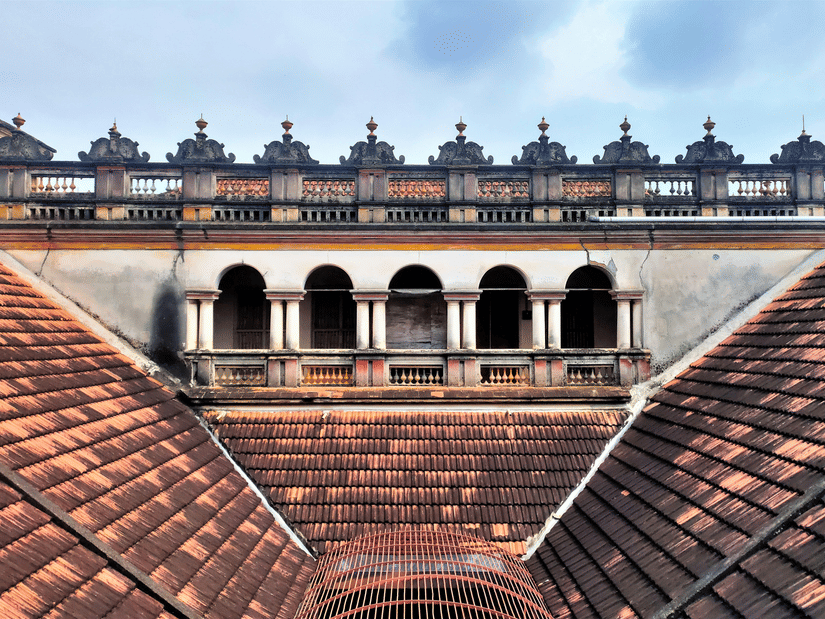
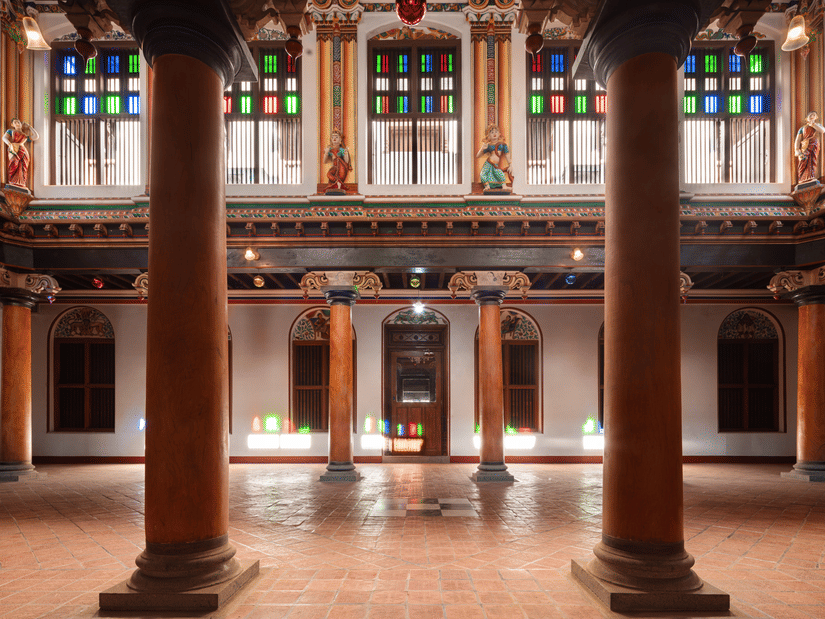
Each family's mansion became a public display of trading success, built to be seen and admired by neighbours. Teak arrived by ship from Burma, already cut and shaped before reaching the building site. Marble arrived from Italy for flooring and columns, while ornamental mirrors and chandeliers came from Belgium.
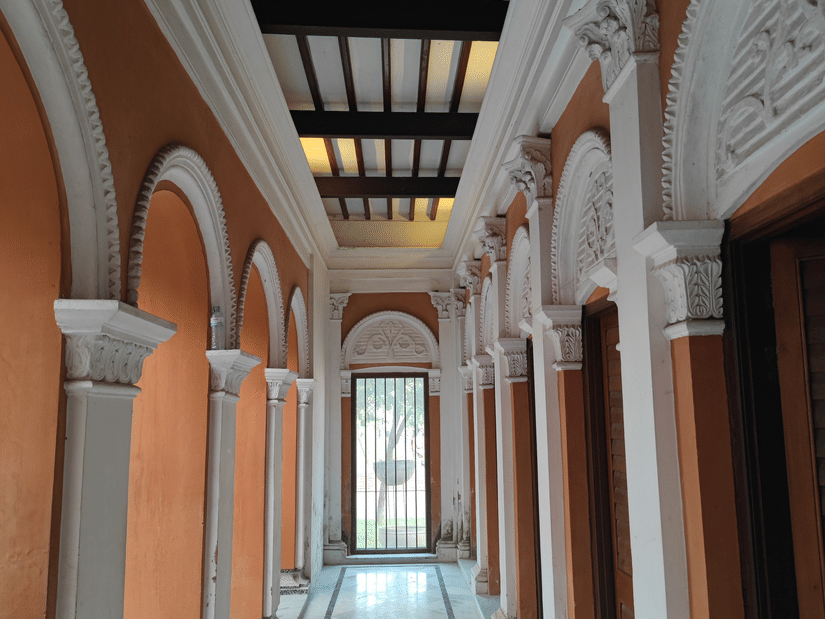
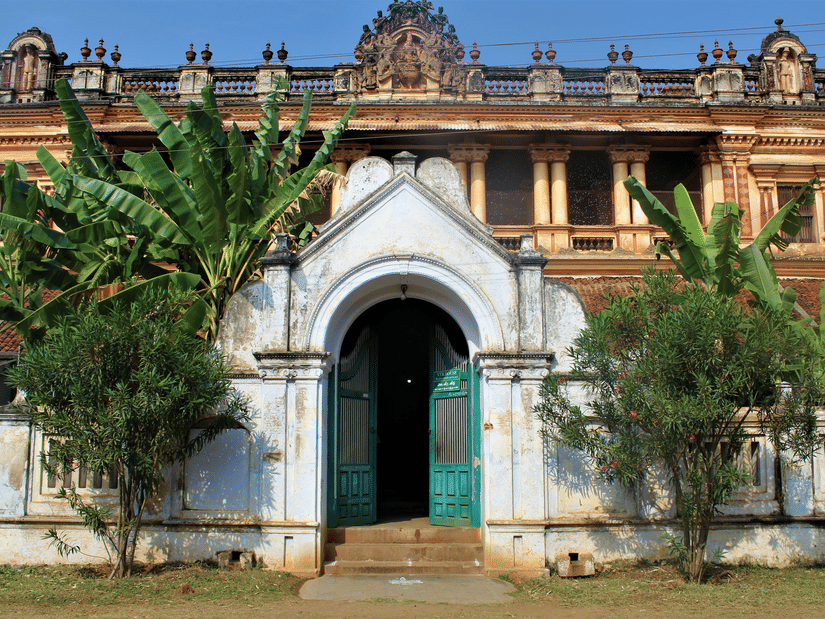
Neoclassical columns, Art Deco facades, and Gothic-style windows all appeared alongside traditional Tamil design elements. UNESCO's own review of the region describes this blending as a genuine synthesis of Western and Tamil traditions. You will notice that same synthesis across nearly every mansion facade still standing in the region today.
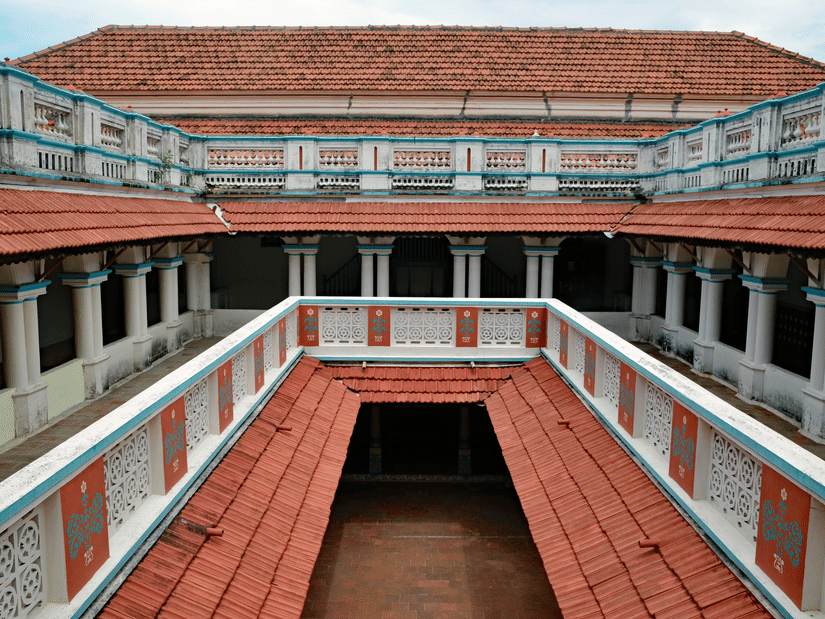
Courtyard Layout: Several open courtyards structure airflow and natural daylight through the home.
Structural Woodwork: Burma teak forms the pillars, beams, and door frames throughout most mansions.
Ornamental Detailing: Hand-carved wooden ceilings and ornate pillars mark the most formal reception rooms.
Flooring: Cement-based Athangudi tiles, covered in more detail further below, line most interior floors.
Design Fusion: Tamil courtyard planning meets European columns and window detailing throughout.
That same fusion of styles comes together completely in the mansion you'll come to know as Kanadukathan Palace.
Kanadukathan Palace: Chettinad's Landmark Mansion
Kanadukathan sits within Sivaganga district and forms part of the region UNESCO has placed on its tentative World Heritage list. The village is named as the starting point for a proposed cultural itinerary through Chettinad's historic settlements. Its most prominent mansion, popularly known as Kanadukathan Palace, anchors the village's reputation among heritage travellers and researchers alike.
UNESCO's own documentation places Kanadukathan within Cluster I, the first grouping named in its heritage nomination. Look closely at the entrances here, since many are built in a temple-like style unique to this village. Guided tours typically show you the exterior details, since most mansions remain privately owned family homes.
Life Inside a Chettiar Mansion
Nagarathar family life traditionally centres around 9 ancestral clan temples, each individually known as a kovil. Community members belonging to the same kovil are treated as siblings and do not intermarry. In many Nagarathar households, the father traditionally held authority while the mother managed daily household affairs.
Wider clan members played an active role in major family events, particularly weddings held inside these mansions. Hospitality customs in many Nagarathar homes involved separate seating for guests and elaborate multi-course feasts.
Athangudi Tiles and the Art of Chettinad Interiors
Athangudi tiles take their name from the Sivaganga village where artisans still make them by hand. Craftsmen originally developed the technique as a cheaper substitute once imported Italian marble grew too costly. Each tile is then pressed using a metal stencil and cured in water for 8 to 12 days before use.
Rooms also hold antique teak and satinwood furniture, often passed down across several family generations. Carved wooden pillars and doors display intricate depictions of Hindu deities alongside detailed floral motifs. Step into any formal reception room, and you'll spot Belgian chandeliers and ornate mirrors adding to the imported character of these interiors.
Preserving a Vanishing Heritage
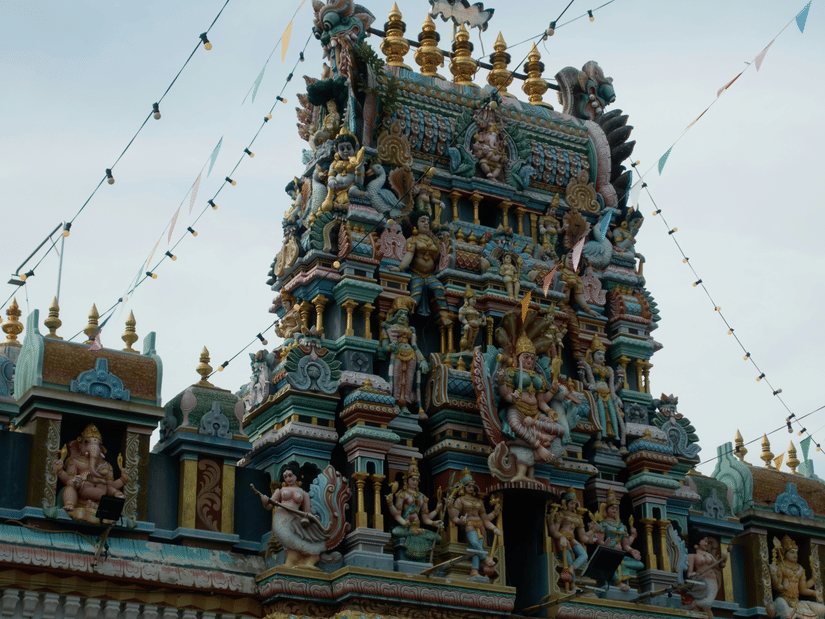
India nominated the wider Chettinad region to UNESCO's tentative World Heritage list back in 2014. That listing recognises the area's unique blend of trading history, architecture, and community rituals alike. Religious life in the region centres on ancestral clan temples, including the nearby Pillayarpatti Karpaga Vinayagar Temple.
That temple houses a rock-cut Ganesha idol and hosts a 10-day Vinayaka Chaturthi festival each year. Heritage hotels, guided tours, and craft revival projects now give you several ways to support these buildings' active use.
Chettinad's Cuisine and the Culture of Hospitality
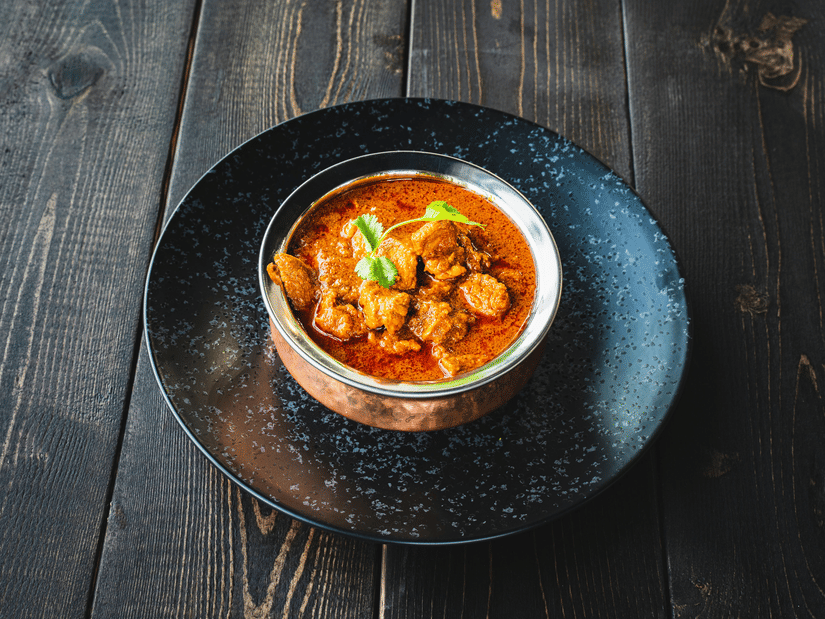
Chettinad cuisine ranks among India's most distinctive regional cooking styles, built around freshly ground spice blends. Signature dishes include Chicken Chettinad, a spiced potato roast called Urulai, and the dessert Paal Payasam. Cooks traditionally favour fresh, stone-ground spices rather than pre-mixed commercial powders, though many kitchens now use modern equipment.
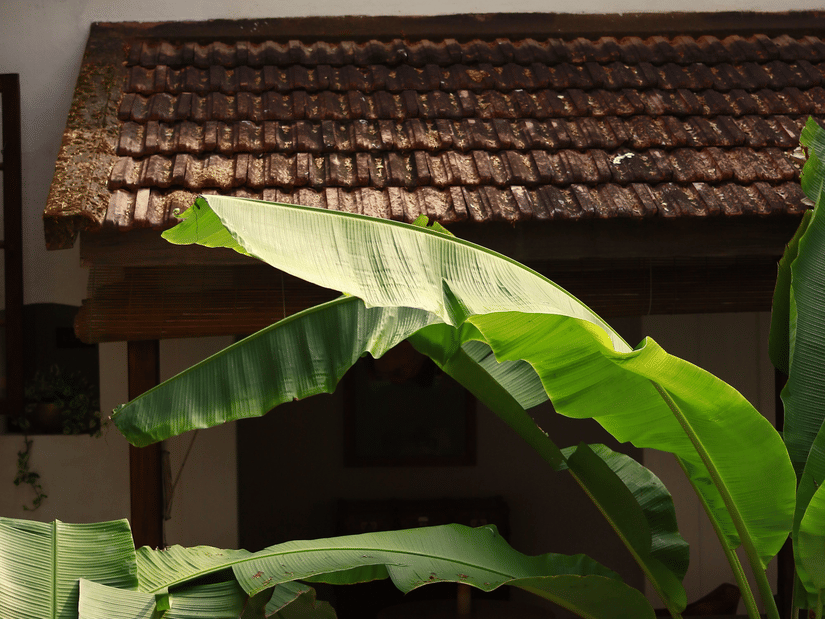
Order a traditional meal today, and it may still arrive on a banana leaf for you to eat by hand. That same serving custom is still practised at some heritage properties across the region today. This shared hospitality culture, built on generous feasts and communal tables, grew directly out of the community's mansion-based family life.
Dig past the standard travel guides, and a handful of specific details about Chettinad Palace start to stand out.
A Cost-saving Alternative Enters the Villages: Athangudi's famous tiles began as a local substitute once Italian marble grew too expensive to keep importing.
British Ironwork Within Tamil Homes: Cast-iron columns and structural elements, imported from Britain, sit inside otherwise traditional courtyard layouts.
A Region Built Almost Entirely on Credit: The Nagarathar community's wealth came primarily from banking and moneylending rather than manufacturing or farming.
9 Kovils, a Shared Social Rule: Marriage rules tied to 9 clan temples still shape how some Nagarathar families identify their community ties today.
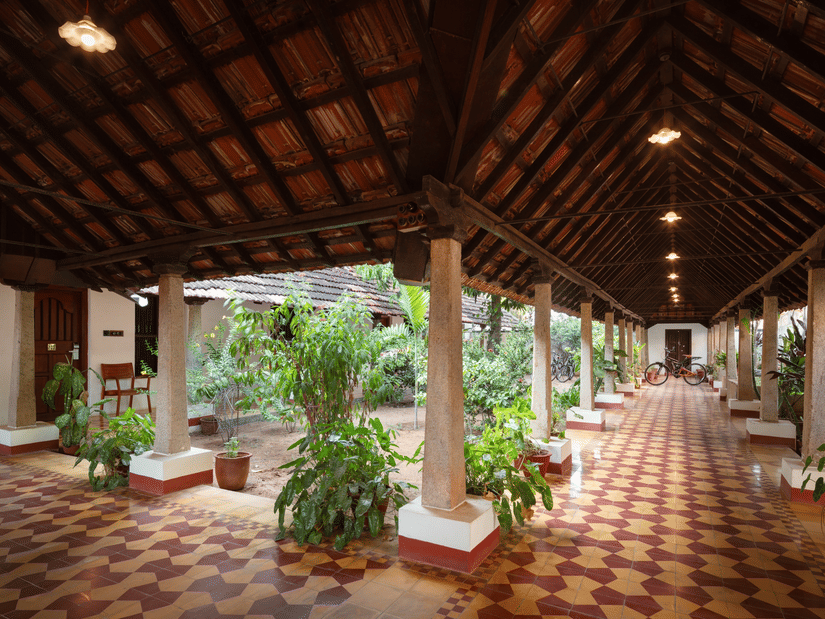
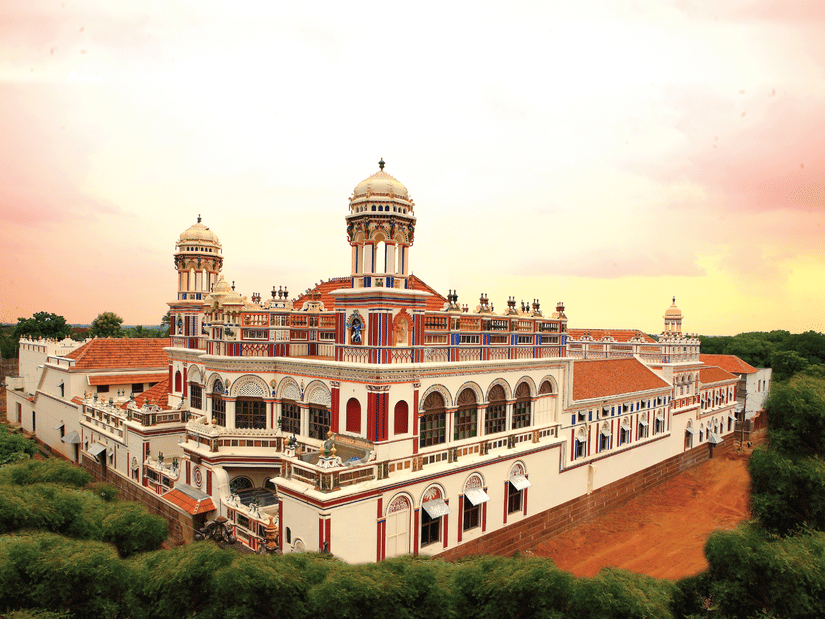
Chidambara Vilas - A Luxury Heritage Resort sits inside exactly this landscape near Pudukkottai, itself a restored Chettiar mansion built between 1897 and 1904. Burma teak, Italian marble, and Belgian chandeliers fill the same rooms once occupied by the family that built it. You're welcome to join a guided tour of the mansion or walk the surrounding heritage village.
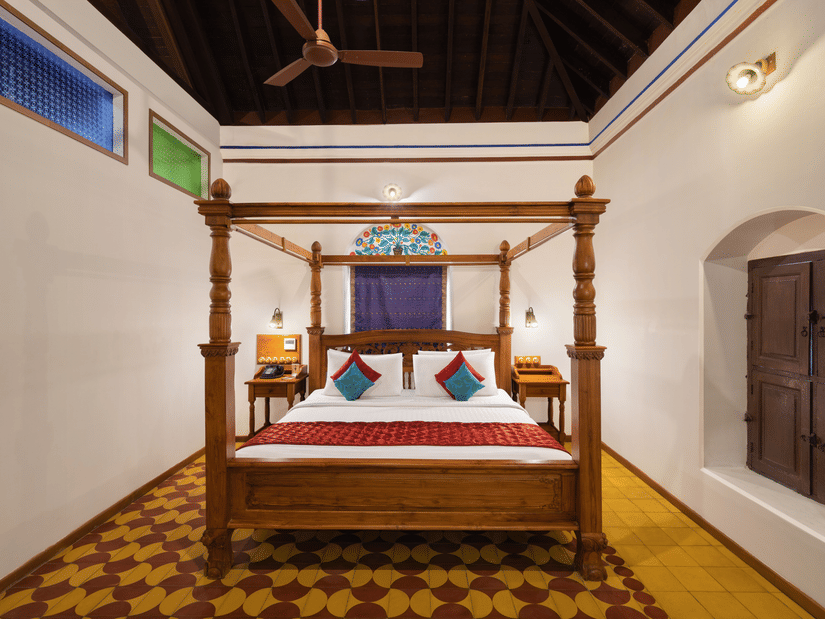
Our 5 room categories range from the cosy 300 sq. ft. Heritage Standard Room to the expansive 1,050 sq. ft. Heritage Luxury Suite. Rather than recreating Chettinad style, these rooms are part of it, set within a heritage mansion where period architecture, traditional craftsmanship, and original design elements remain woven into everyday life.
Heritage Standard Room: A cosy retreat featuring twin beds, subtle heritage touches, and spacious interiors inspired by the mansion's timeless character
Heritage Garden View Room: Overlooking landscaped gardens, these rooms combine Chettinad-inspired architecture with tranquil surroundings and contemporary bathrooms with bathtubs.
Heritage Pool View Room: Tiled floors, exposed wooden ceiling beams, period-style furnishings, and handcrafted details reflect the grandeur of traditional Chettinad homes, while the poolside setting adds to the serene atmosphere.
Heritage Deluxe Room: Once grand family bedrooms, these spacious rooms preserve the scale, authentic decor, and stately ambience of the mansion, complemented by generously sized bathrooms with bathtubs.
Heritage Luxury Suite: Featuring a separate living room, a majestic 4-poster bed, a dressing area, a Jacuzzi, and lush surroundings, a stay here feels like stepping into Chettinad's aristocratic past
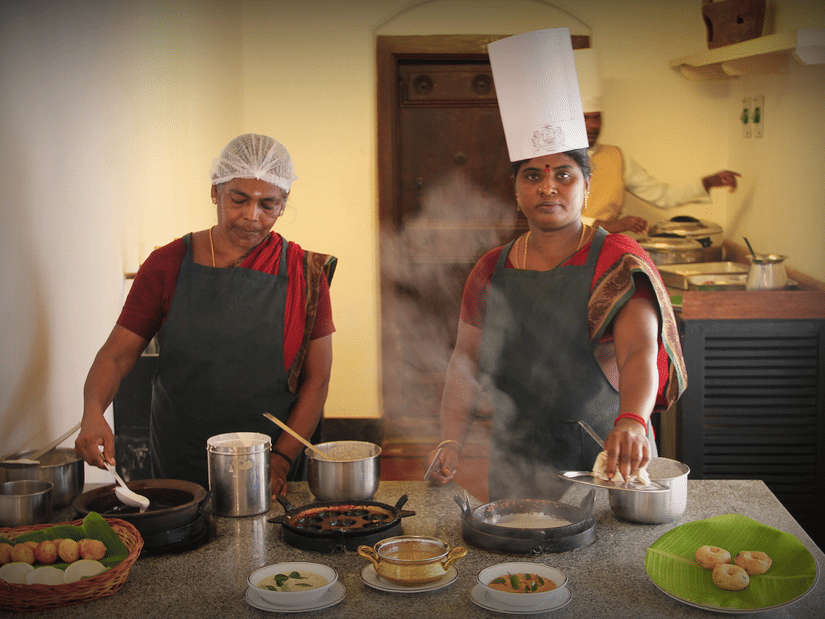
Meals unfold across 3 distinctive dining experiences, including Visiri Hall, where banana-leaf lunches follow old Nagarathar seating customs beneath paintings inspired by the Ramayana and Mahabharata. Kalyana Kottagai serves fine dining within the mansion's original pillared hall beneath ornate double-height ceilings.
Beyond dining, immerse yourself in Chettinad's living traditions through a guided tour of the 120-year-old mansion, a heritage village walk, a leisurely bullock cart ride, flower garland making, traditional kolam drawing, and interactive cooking classes led by local chefs. Between its carefully restored architecture, immersive culinary experiences, and thoughtfully curated activities, Chidambara Vilas offers far more than a stay, providing a lived experience of the heritage that defines Kanadukathan Palace and the wider Chettinad region.