The Royal History of Thanjavur Maratha Palace
The palace traces its origins back to the 16th century, when it first served as the residence of the Thanjavur Nayak rulers. Later, in the late 17th century, the palace became the seat of the Thanjavur Marathas, marking a significant shift in the region’s political and cultural history.
Over time, the palace evolved into an architectural and cultural landmark reflecting Maratha influence in Tamil Nadu. The last ruling king to reside in the palace was Raja Shivaji of Thanjavur, after which the monarchy gradually declined under British rule.
Today, the palace remains closely associated with the Bhonsle family, descendants of the Thanjavur Marathas. Its long-standing role as a royal residence earned it the name ‘Thanjavur Aranmanai’, with ‘Aranmanai’ meaning ‘royal palace’ in Tamil. Beyond its political legacy, the palace stands as a testament to centuries of cultural exchange, royal patronage of the arts, and South India’s layered history.
Architectural Influences & Key Highlights of the Palace
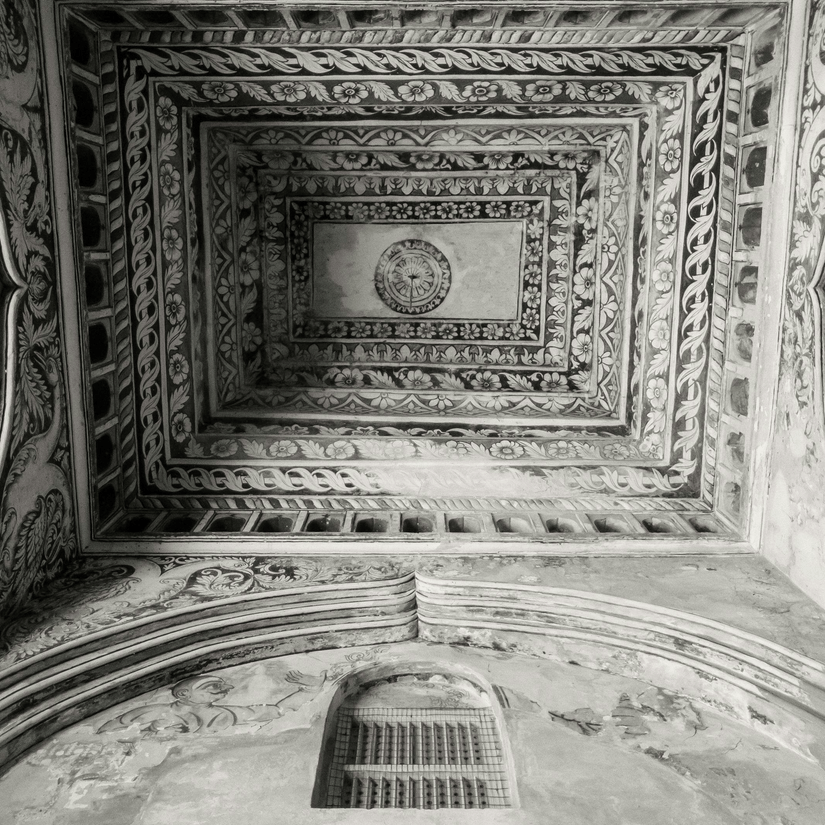
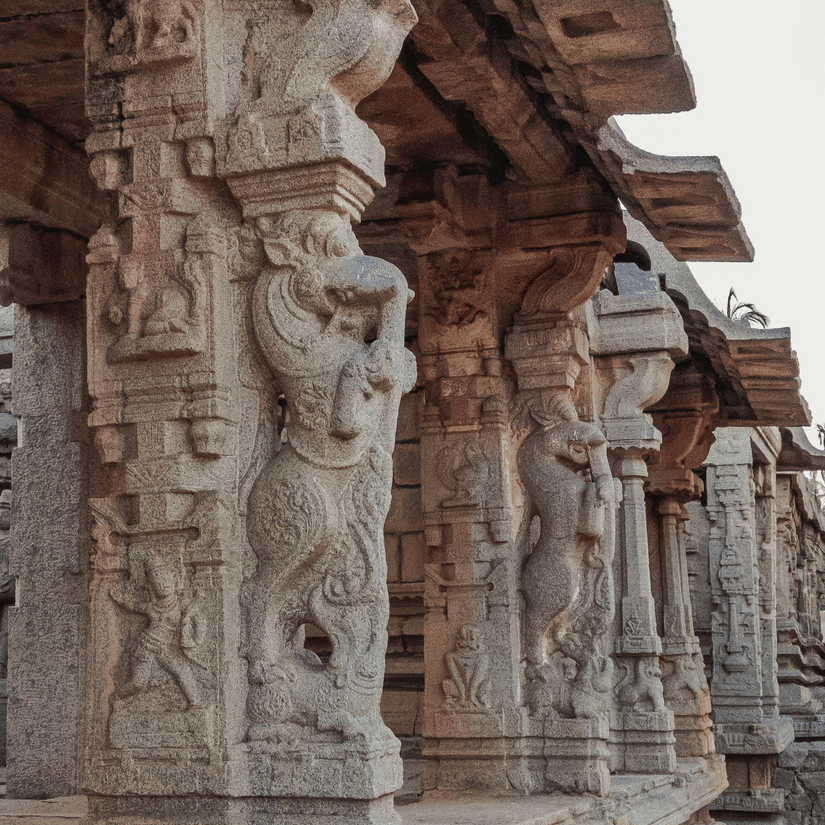
The Thanjavur Maratha Palace was originally built in the Nayak sub-style of Dravidian architecture. Later, the Thanjavur Maratha rulers thoughtfully introduced elements of Maratha design, creating a graceful architectural fusion while carefully preserving the integrity of the original structure.
The Maratha contribution can be seen in the palace’s libraries, art galleries, audience halls, murals, and decorative elements, where Deccan-inspired arches, courtly embellishments, and expanded ceremonial spaces transformed the palace into both a political and cultural hub.
This harmonious blend of dynasties showcases how layered cultural influences culminated in an architectural masterpiece that remains awe-inspiring centuries later.
Significant Highlights of the Palace
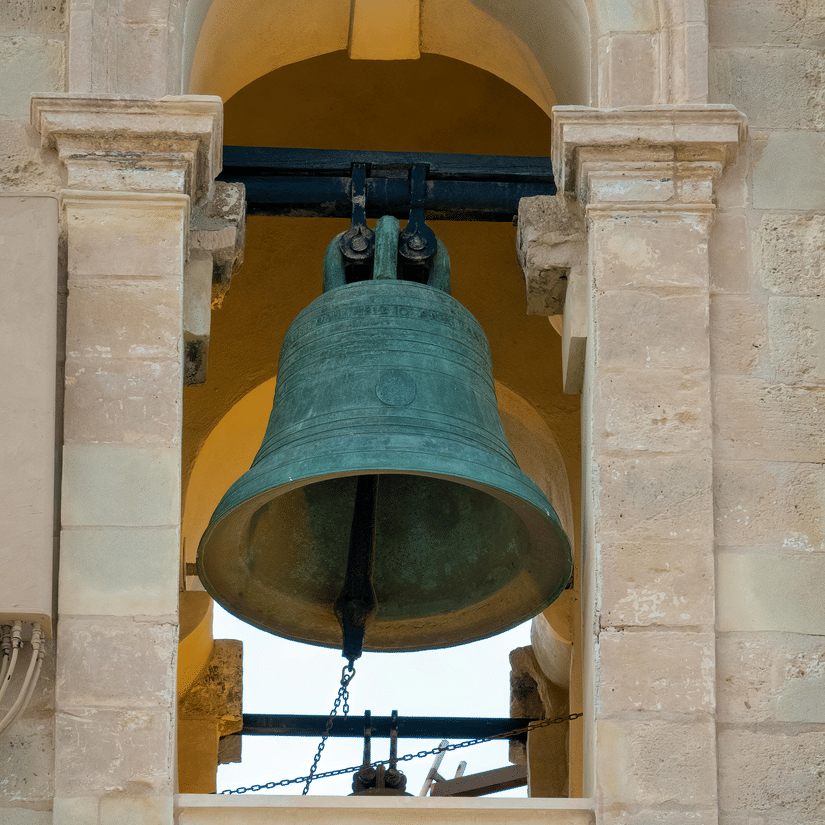
The Bell Tower
Located near the entrance of the palace, the Bell Tower is primarily a Nayak-era structure. It was used to announce the time and important public events, and also functioned as a watchtower overlooking the surrounding areas.While its base reflects Nayak engineering, the continued use and preservation of the tower during the Maratha reign demonstrate how the Marathas maintained and integrated earlier architectural elements rather than replacing them.
Saraswathi Mahal Library
One of the most celebrated features of the palace is the Saraswathi Mahal Library, one of the oldest surviving medieval libraries in the world.The library houses over 49,000 manuscripts, written on paper and palm leaves, in languages such as Tamil, Marathi, Sanskrit, and Telugu. The collection traces its origins to the Nayaks, with the Maratha kings later expanding and enriching it, transforming the repository into a distinguished centre of scholarship and learning.
The Durbar Hall
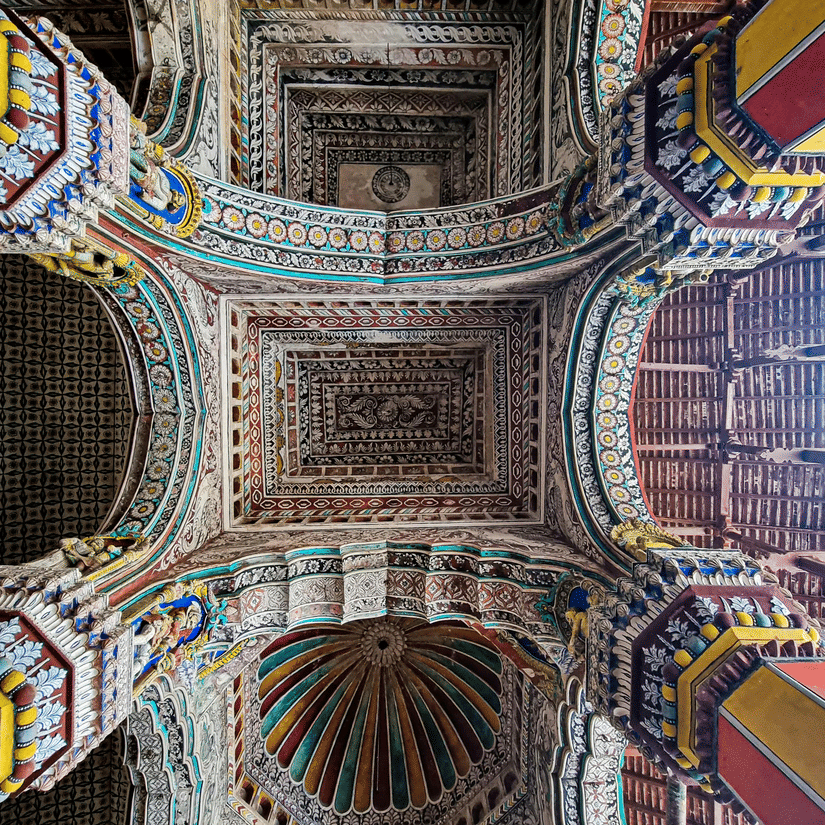
The Durbar Hall (Audience Hall) stands as one of the finest examples of Maratha influence within the palace complex. Originally built by the Nayaks, it was later enhanced by the Maratha rulers. The hall spans approximately 4,500 sq. ft. and is supported by massive Iluppai wood pillars, designed for structural strength and thermal comfort in a tropical climate.
The Maratha Influence is especially visible in:
- Courtly murals depicting Hindu mythology and Maratha kings
- Decorative arches and ornamental stucco work
- Expanded ceremonial detailing suited to Maratha court traditions
This hall represents the transformation of a Nayak administrative space into a grand Maratha royal court.
Raja Raja Chola Art Gallery
The Raja Raja Chola Art Gallery, housed within the palace complex, showcases bronze idols of Hindu deities, ancient sculptures, and historical artefacts that span the Chola, Nayak, and Maratha periods.
Sangeetha Mahal
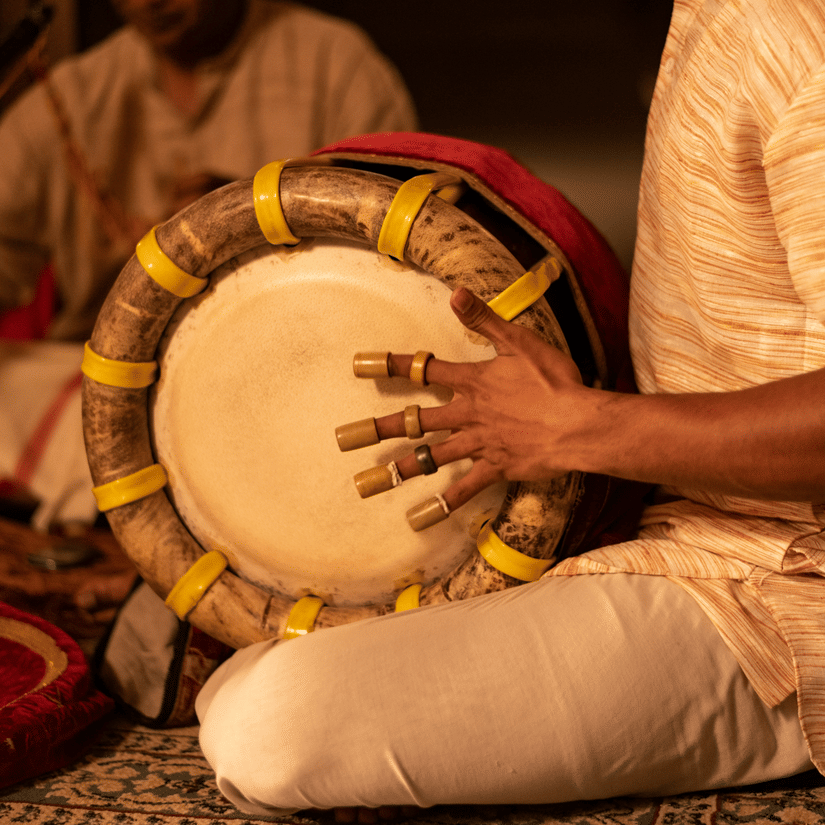
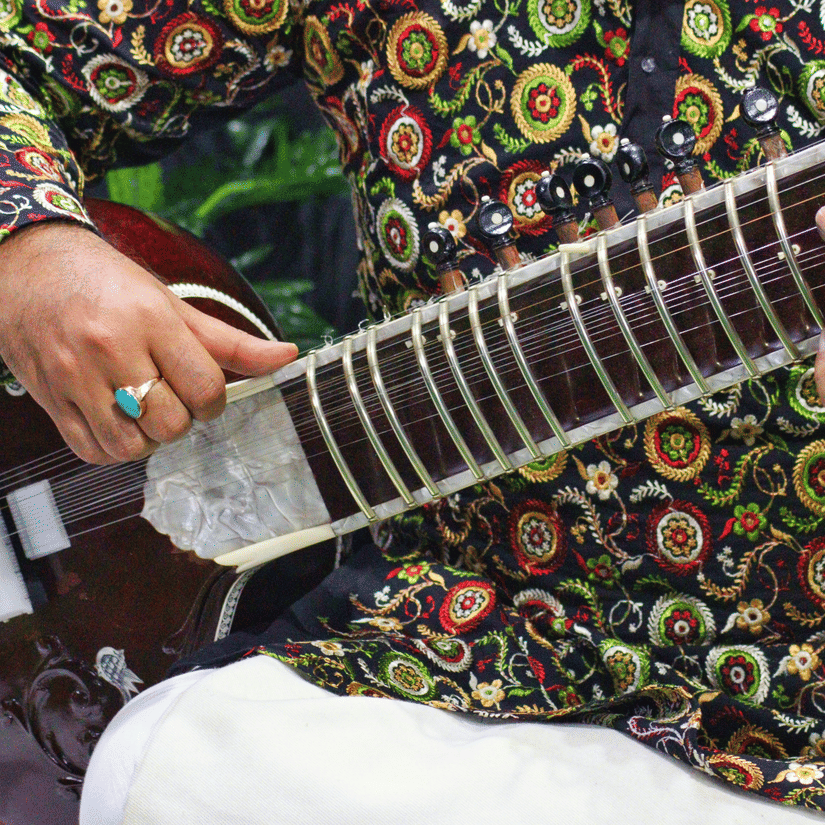
The Sangeetha Mahal, meaning ‘Hall of Music’, is an architectural and acoustic marvel.Originally constructed by the Nayaks and known as ‘Navaratnamanamaina Nataka Sala’, the structure was later enhanced under the Maratha rulers and renamed Sangeetha Mahal. The Marathas, known for their patronage of Carnatic music and performing arts, reinforced the hall’s role as a cultural performance space.
Key features include:
- Natural acoustic design without modern amplification
- A water pool in front for sound reflection
- Two-level seating arrangement—common audience below, royalty above
The Maratha enhancements helped solidify Thanjavur’s legacy as a centre for classical music and courtly performance traditions.
How the Palace Shaped Thanjavur’s Cultural Legacy
This palace in Thanjavur played a pivotal role in shaping the city’s identity as a centre of art, music, and literature. More than a seat of power, the palace functioned as a vibrant cultural hub where artistic traditions were nurtured and preserved. Within its halls, the distinctive style of Thanjavur painting evolved, known for its rich colours, devotional themes, and gold embellishments.
The palace complex also fostered the growth of Carnatic music and classical performance traditions, particularly through dedicated spaces like the Sangeetha Mahal, designed with remarkable acoustic precision. At its intellectual core lies the Saraswathi Mahal Library, home to thousands of manuscripts that reflect centuries of scholarship in Tamil, Sanskrit, Marathi, and Telugu.
Through architecture, art, performance, and learning, the palace helped shape Thanjavur into one of South India’s most enduring cultural capitals.
How to Reach Thanjavur Maratha Palace
The Maratha palace in Thanjavur is located centrally, making it easily accessible by road, rail, and air.
Nearest Airport: Tiruchirappalli International Airport, approximately 62 km from the palace. From the airport, visitors can hire taxis or use local transport services to reach Thanjavur in about 1.5 hours.
Nearest Railway Station: Thanjavur Junction is just 2 km from the palace. It is well-connected to major cities in Tamil Nadu and nearby states. Auto-rickshaws and taxis are readily available, and the palace is close enough for a short ride from the station.
Nearest Bus Stand: The Old Bus Stand (Tanjore Bus Stand) is located within walking distance of the palace, making bus travel a convenient option for regional visitors.

Timings & Visitor Information
Most sections of the palace, including the art galleries, operate within the same timings. Some areas may close briefly during midday, so visiting in the morning hours is recommended for the best experience.
- Opening Hours: 10:00 AM to 4:30 PM
- Closed on: Public holidays and major festivals
- Entry Fee: 50 INR per adult (subject to change)
- Cameras are allowed, but photography may incur an additional charge.
- It is advisable to carry small change for tickets and camera fees.
Plan to spend at least two hours exploring the palace complex, as it is expansive and includes multiple halls, galleries, and historical sections.
A Comfortable Stay near Thanjavur Maratha Palace
Located just around 4 km from the Thanjavur Maratha Palace (Thanjavur Aranmanai), Sangam Hotel serves as a convenient and comfortable base for exploring the palace and nearby attractions.
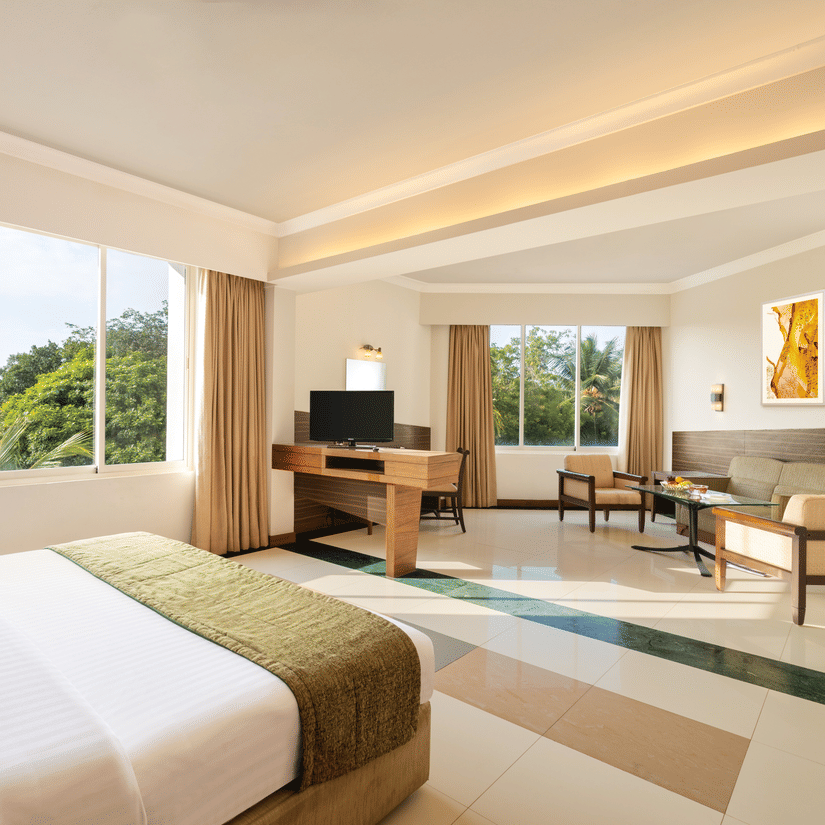
Whether you are visiting for heritage tourism, leisure travel, or business, our property offers 54 well-appointed rooms and suites designed to suit a wide range of travellers.
Each accommodation is equipped with essential modern amenities, including air-conditioning, Wi-Fi, television, minibar, and laundry services, ensuring a relaxed and seamless stay after a day of sightseeing in Thanjavur.
Facilities Designed for a Relaxed Heritage Stay
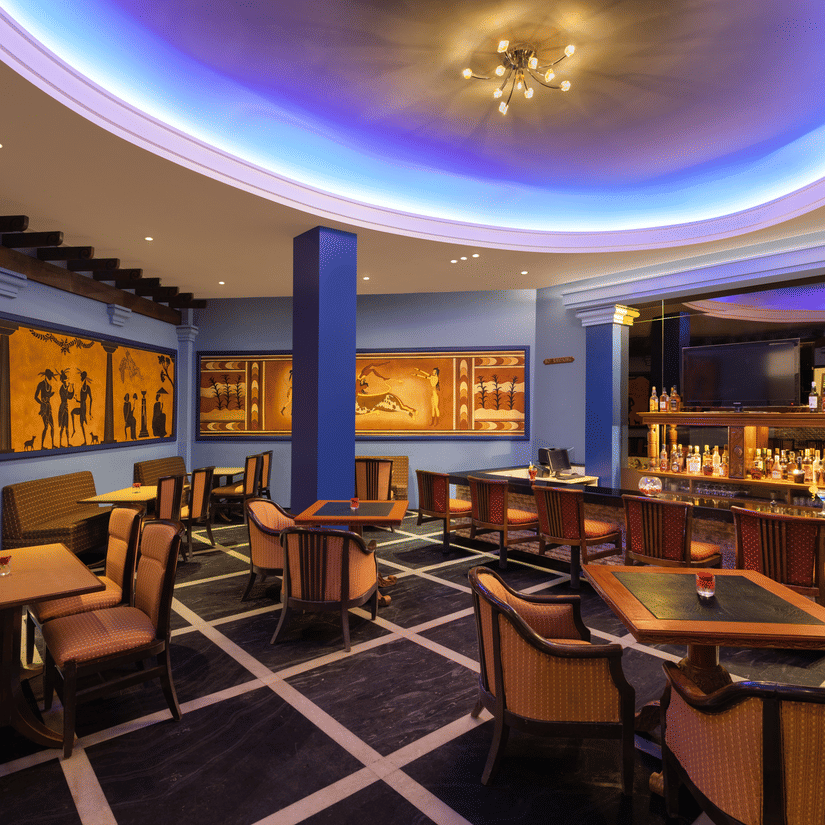
- A Grecian-themed bar offering a distinctive ambience for evening relaxation
- A multi-cuisine restaurant, featuring intricate art-inspired decor and curated dining experiences
- 24/7 in-room dining and packed meal options for added convenience
- Two banquet halls and a lawn by the pool, ideal for celebrations and gatherings
- Easy access to other attractions like Brihadeeswara Temple (~3 km) and Vijaynagar Fort (~3 km)
- A dedicated travel desk, assisting guests with local sightseeing and city exploration
Together, these facilities create a stay experience that blends modern comfort with Thanjavur’s rich heritage atmosphere, making it an ideal choice for visitors exploring the Thanjavur Maratha Palace and the city beyond.