The History of Brihadeeswara Temple Under Rajaraja Chola I
Rajaraja Chola I raised the building between 1003 and 1010 CE, at the peak of his power. He named it Rajarajesvaram, meaning the shrine of Rajaraja's god, and it doubled as a statement of empire. The dynasty ran religion, revenue, and administration through such institutions, so this was never only a place of worship.
The World Heritage listing came in 1987, and 2 later Chola temples joined it in 2004. The Archaeological Survey of India maintains the complex, which is why the fabric has survived 1,000 years of continuous use. Worship never stopped, so preservation here means managing a living building rather than freezing a monument.
Big Temple, Thanjavur: Why the Nickname has Lasted
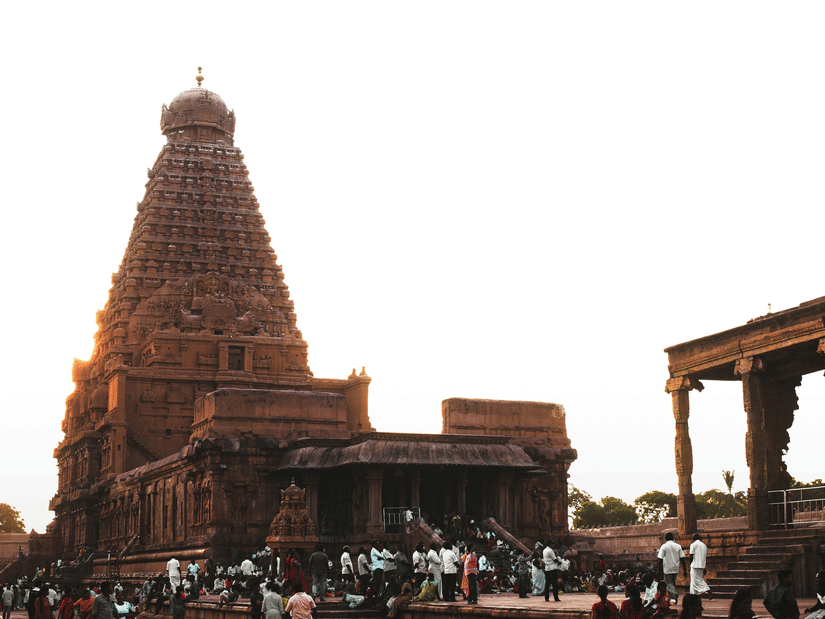
The name Big Temple, Thanjavur, stuck because the building simply dwarfs everything else around it. In Tamil, it is Thanjai Periya Kovil, which translates directly as the big temple of Thanjavur. The nickname is plainly descriptive rather than affectionate, and it has outlasted every formal name.
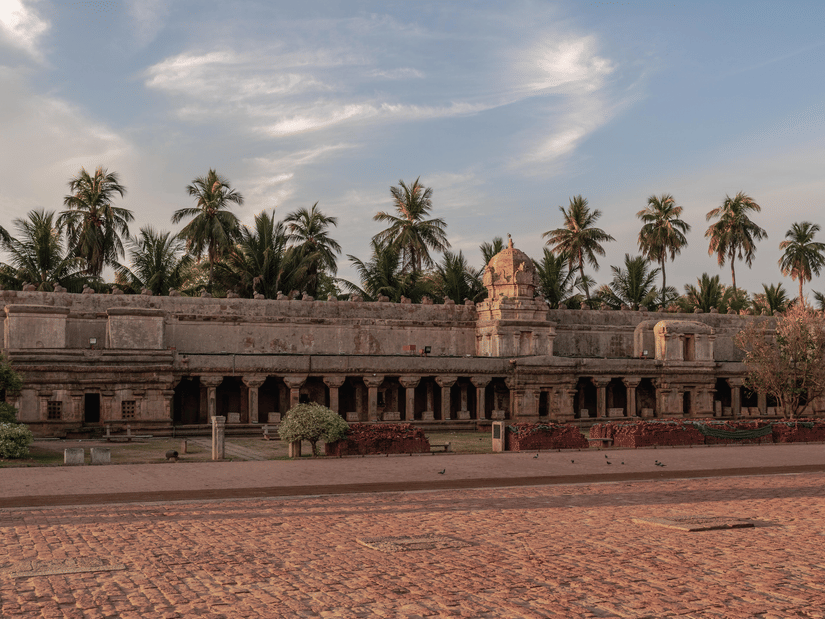
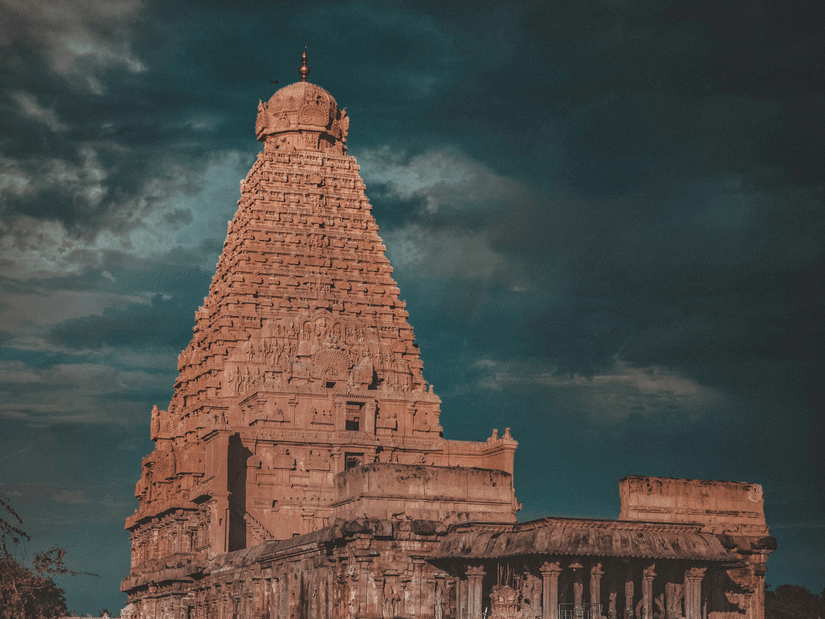
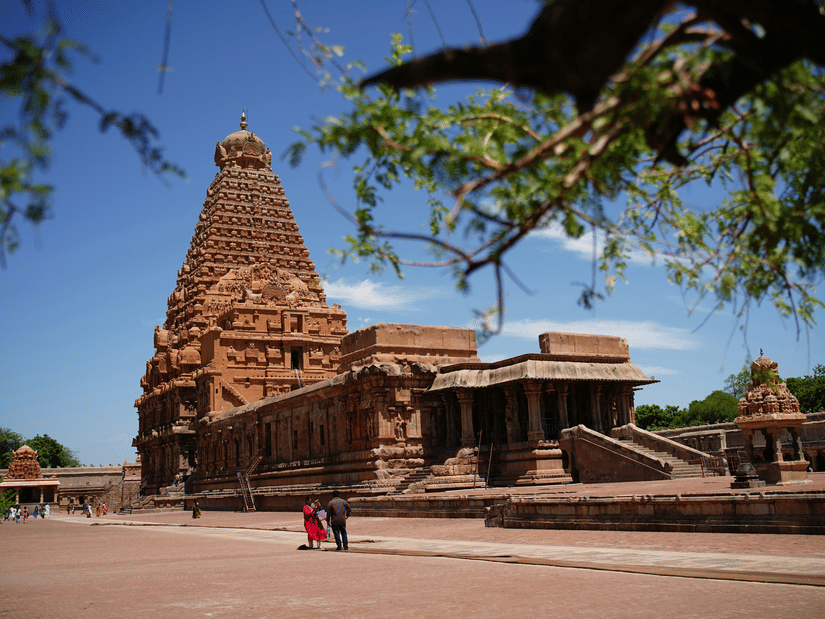
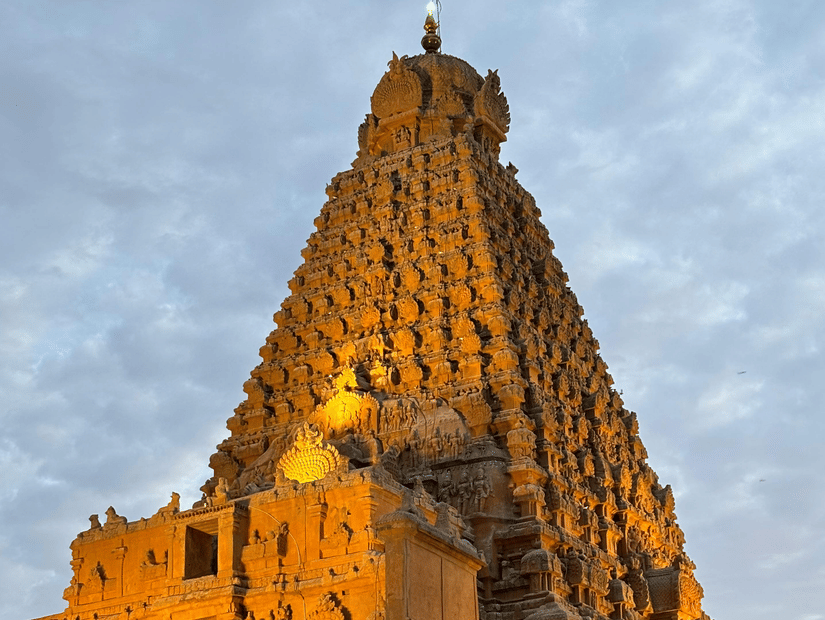
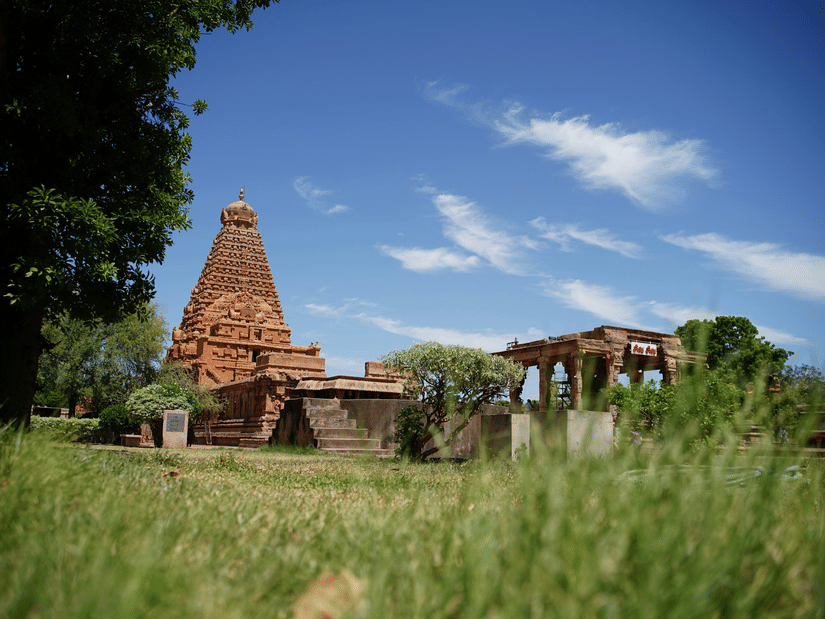
The vimana, or temple tower, rises approximately 216 ft., which is said to be the tallest of its kind. A courtyard, colonnades, and subsidiary shrines surround it, so the tower reads as the centre of a walled city. Within the state's heritage landscape, this is the building that every later temple had to answer.
Brihadeshwara Temple Architecture: From Plinth to Painted Wall
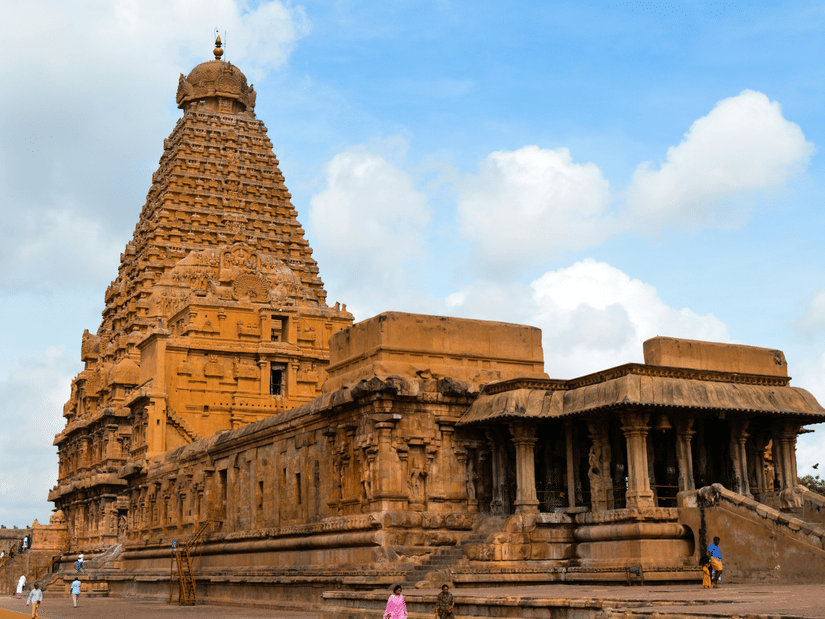
Brihadeshwara Temple architecture follows the Dravidian style of South India, and it is built almost entirely from granite. The stones were bonded without mortar, so the precision of the cutting carries the whole load. A capstone of nearly 80 tonnes sits at the summit, and how it was raised is still debated.
Inside, 11th-century frescoes still cover the walls of the passage that rings the sanctum. They came to light in 1931, when Annamalai University researchers found them beneath later Nayaka painting. Stone carving runs through the whole complex, and the bronze tradition beside it is best seen at the Thanjavur Art Gallery.
Rajaraja's Sanctum is Still in Daily Use
Nothing about the complex has been retired into a museum piece, despite its age and its listing. Priests keep a daily cycle of pooja, the ritual worship that structures the day from dawn until night. Darshan, or the viewing of the deity, is what most visitors come for, and mornings are the calmer option.
Maha Shivaratri, the great night of Shiva, is the principal festival here, and the complex fills far beyond its usual numbers. For a Shaivite shrine of this age, the continuity matters no less than the stonework. Unbroken devotion has run at this site for more than 10 centuries.
The monolithic Nandi bull at the entrance is cut from a single rock, roughly 13 ft. high and about 16 ft. wide. It was installed during the Nayaka period, several centuries after the sanctum, which is not obvious on a first visit. The builders themselves worked without cranes or any powered lifting, and that is the real achievement.
The Capstone: Nearly 80 tonnes of stone, resting at the very top of a 13-storey tower
Mortar-free Masonry: Blocks held by weight and precise fit rather than any binding agent
Reversed Hierarchy: The entrance gopuram, or gateway tower, stands lower than the sanctum, unlike later temples.
Hidden Painting: Chola frescoes survived for centuries beneath later overpainting before anyone looked.
Brihadeeswarar Temple Timings
Morning Opening: 6:00 AM onwards, ideal for an early darshan and a quieter visit
Midday Closure: 12:30 PM, when the temple closes for midday rituals
Evening Opening: 4:00 PM to 8:30 PM, offering cooler hours for prayers and sightseeing
Best Time to Visit: Arrive early for fewer crowds, or visit in the evening for softer light and a more tranquil atmosphere, making it easier to appreciate both the temple’s spiritual character and intricate architecture.
What the Temple Preserved of Tamil Culture
An inscription dated 1011 CE names more than 600 people attached to the temple, with their roles and wages. Priests, potters, carpenters, and 400 dancers with their own gurus all appear in that record. That archive is why historians can reconstruct 11th-century Tamil society from the walls themselves. The building set a template that later South Indian temples followed, and then steadily enlarged.
For anyone studying Chola art, this is the primary classroom rather than a secondary reference. It still anchors the cultural identity of the city, and it draws students, pilgrims, and architects alike. Active worship and academic study share the same enclosure, which keeps it busy rather than merely preserved.
The Carvings Below the Vimana Most Visitors Miss
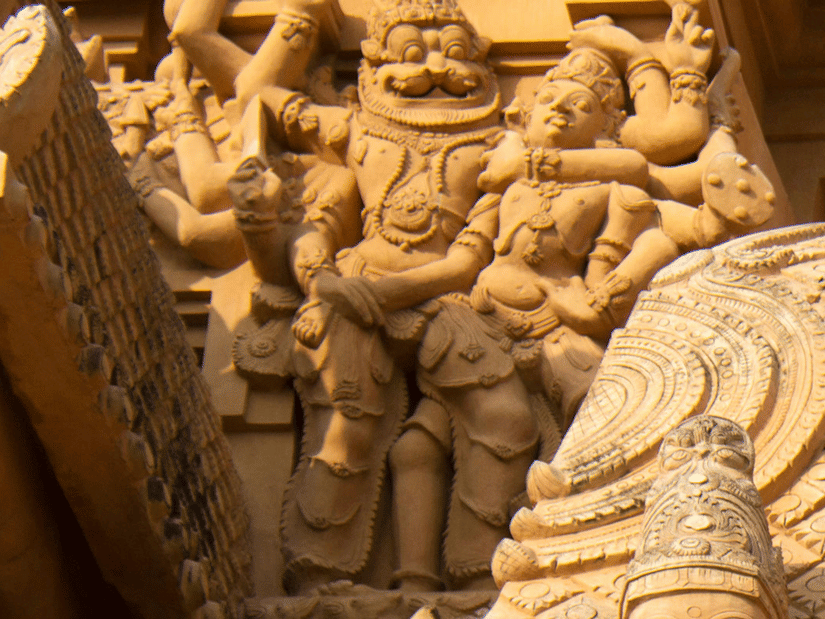
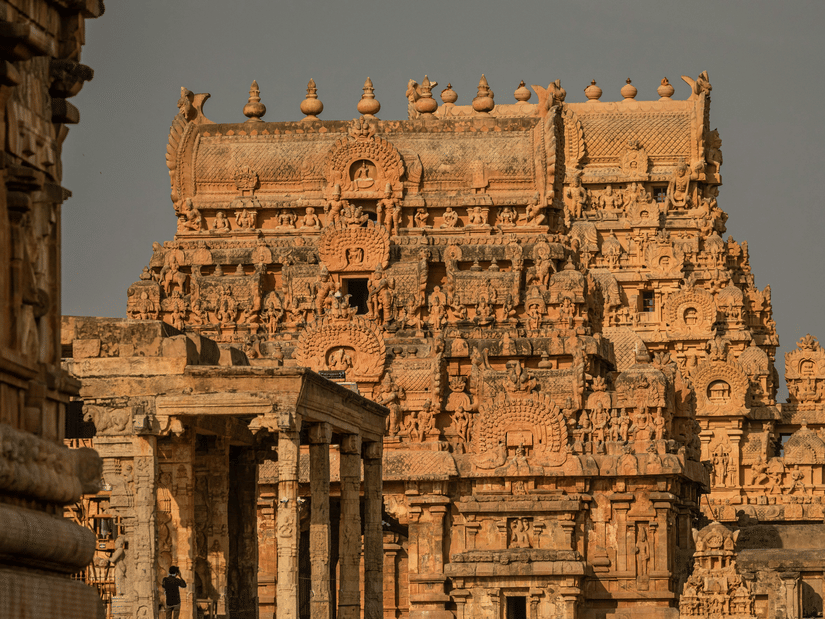
The tower pulls the gaze upward, but the carving that rewards attention sits at eye level. The plinth mouldings, guardian figures, and inscription bands repay a slow circuit of the courtyard, especially when the softer light of early morning or late afternoon brings out the details in the stone. For a closer look at seasonal conditions and planning your visit around the weather, see our guide to the best time to visit Thanjavur.
The frescoes sit in a dim passage, so give your eyes a moment before judging them. Treat the site as a place of active worship first and a monument second, because both are true at once.
Look Closely: Notice the carved plinths, guardian figures, inscriptions, columns, and sculptural details around the complex.
Frame the Scale: Use the Nandi, gateways, columns, and visitors in your photographs to capture the sheer size of the temple.
Choose Your Light: Early morning brings softer shadows across the granite, while sunset gives the vimana and courtyard a warmer, more sculptural character.
Pause for the Frescoes: Give your eyes time to adjust in the dim passage before looking closely at the surviving Chola paintings.
Respect the Heritage: Follow photography rules, avoid touching carvings, and maintain distance during worship. Conservation here protects both a thousand-year-old monument and a living place of worship.
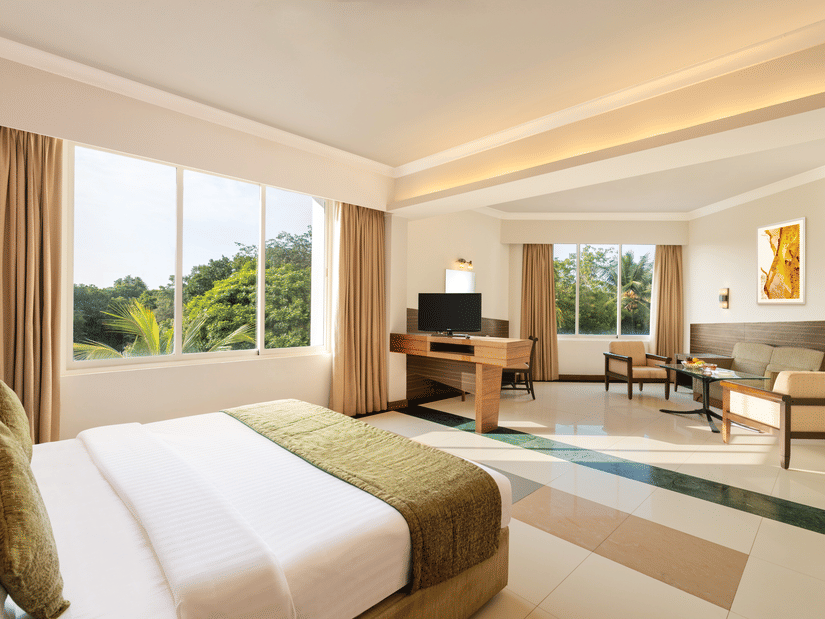
Choose from 4 room categories, each offering a different amount of space and a layout suited to the way you travel.
Executive Room: 295 sq. ft., a practical choice for solo travellers stopping over between trains
Deluxe Room: 495 sq. ft., offering more room to settle in after a day of sightseeing
Family Room: 474 sq. ft. across 2 connected halves, giving families separate sleeping spaces
Suite: 590 sq. ft. with a separate living area, suited to longer stays or trips that combine work and sightseeing
Thillana serves from 6:30 AM, making it easy to have breakfast before heading to the temple gates. Come evening, set aside time for its Thanjavur Thali, a regional set meal that brings together local flavours in one sitting. If you're planning your stay around the temple, our guide to the hotel near Thanjavur temple covers the practical details.