What are Chettinad Cotton Sarees?
Chettinad cotton sarees originate from the Chettinad region in Tamil Nadu, centred around Karaikudi, which became home to the Nattukottai Chettiar community after they settled there in the 13th century. The Chettiars were traders and bankers who built a distinct cultural identity around their wealth, architecture, and textiles, and the saree became one of the clearest expressions of that identity.
These are traditional handwoven sarees, not printed or machine-made imitations. Each piece is handwoven on a loom, which is why no two sarees are identical. The fabric is a thicker variety of cotton, woven densely enough to give it an opaque, slightly textured feel rather than the sheer finish of finer cottons, which also adds to its durability.
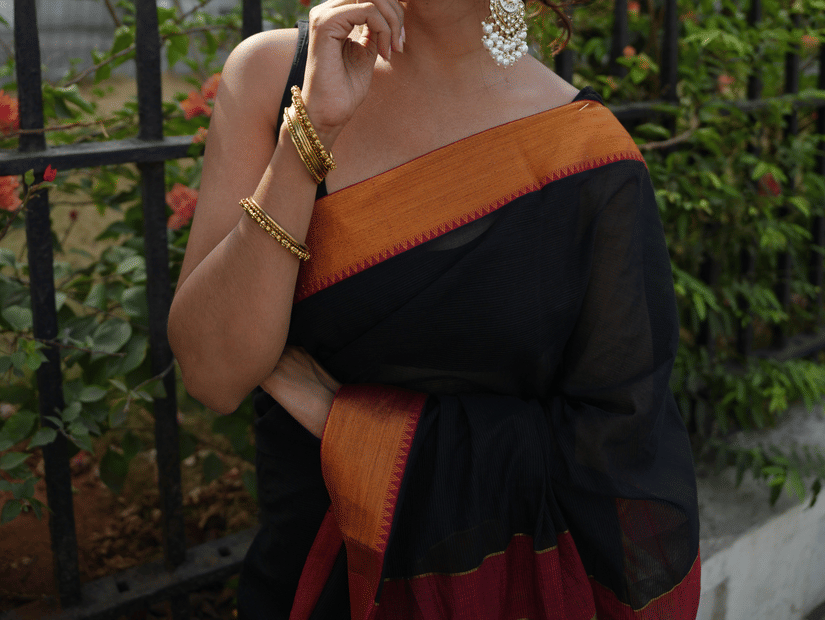
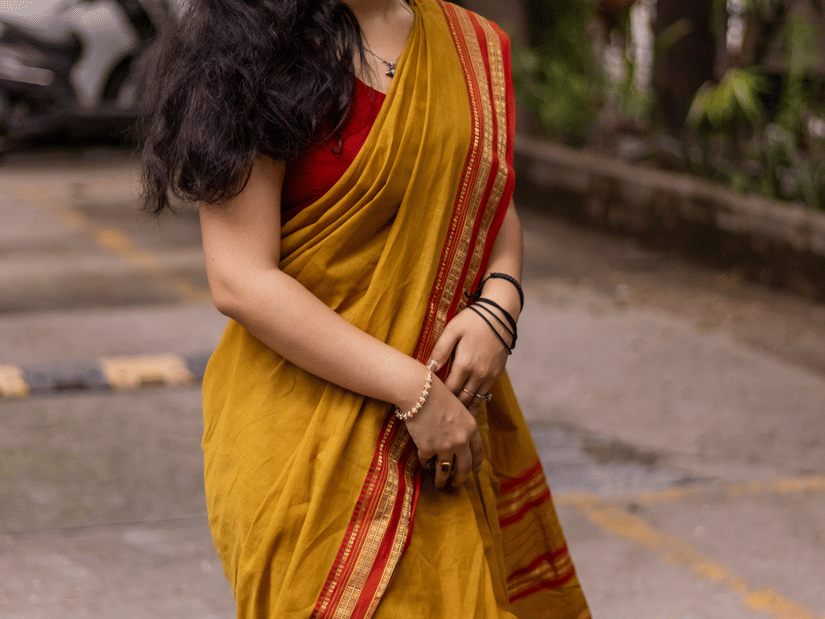
These sarees are known above all for 3 qualities:
Comfort: A dense cotton weave that allows air to move freely, keeping the wearer cool in Tamil Nadu's heat
Durability: A thicker yarn and tighter weave that hold their shape and colour through years of regular use
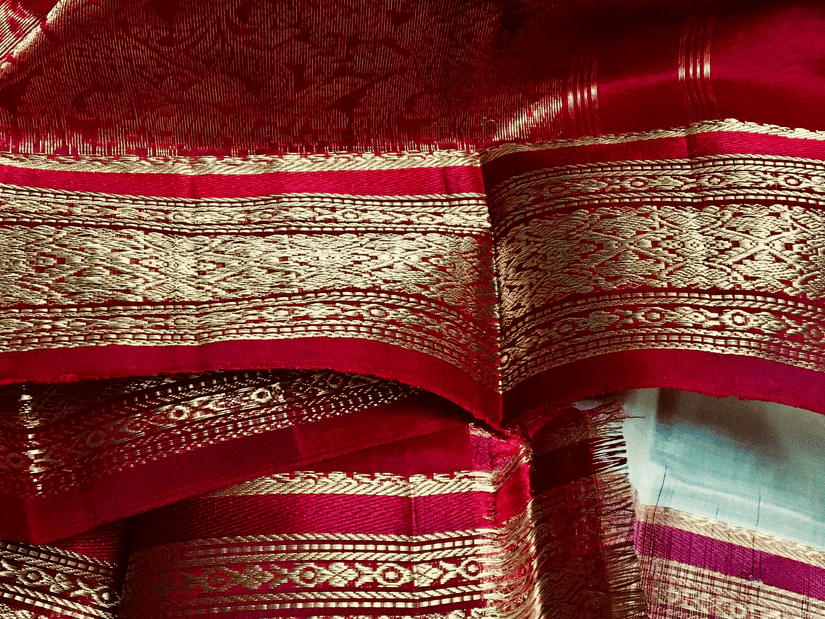
Vibrant Patterns: Checks, stripes, and temple-inspired borders set against bold, contrasting colour blocks, often in earthy and jewel tones such as mustard, maroon, indigo, leaf green, and turmeric yellow, set off by a contrasting pallu, the decorative end piece of the saree
Beyond fashion, this textile holds real cultural weight. For the Chettiar community, the saree was never just clothing; it was tied to status, ritual, and daily life, much as the grand mansions of Chettinad spoke to a family's standing in trade. Today, it continues to represent the region's textile heritage, a living record of a community's history passed down rather than written down.
The Weaving Process
The weaving process behind every Chettinad handloom saree follows a few defining steps:
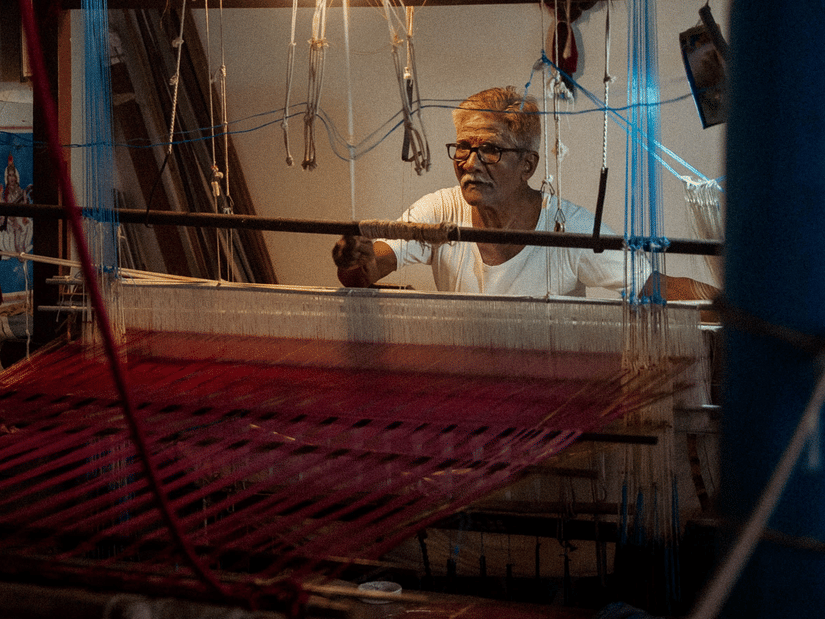
Weavers use pit looms or raised pit looms fitted with a fly shuttle, sitting with their legs in a pit below the loom while working the shuttle by hand.
The warp is spread behind the loom using a traditional method known as ball warp.
Small stripes in contrasting colours are added at the border joints, giving the finished saree its characteristic edge definition.
The borders are woven distinctly wider than those of standard cotton sarees.
The pallu is typically finished with a weft stripe pattern that ties the design together.
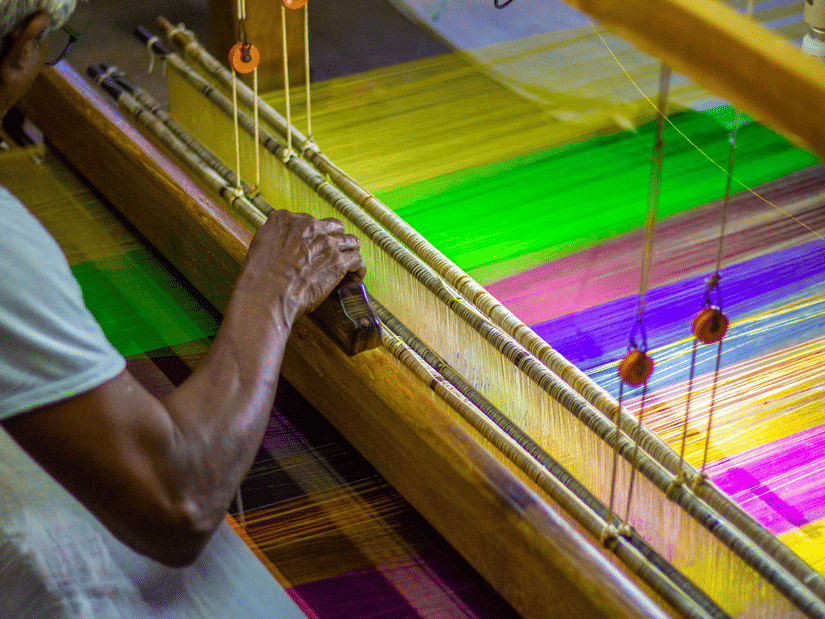
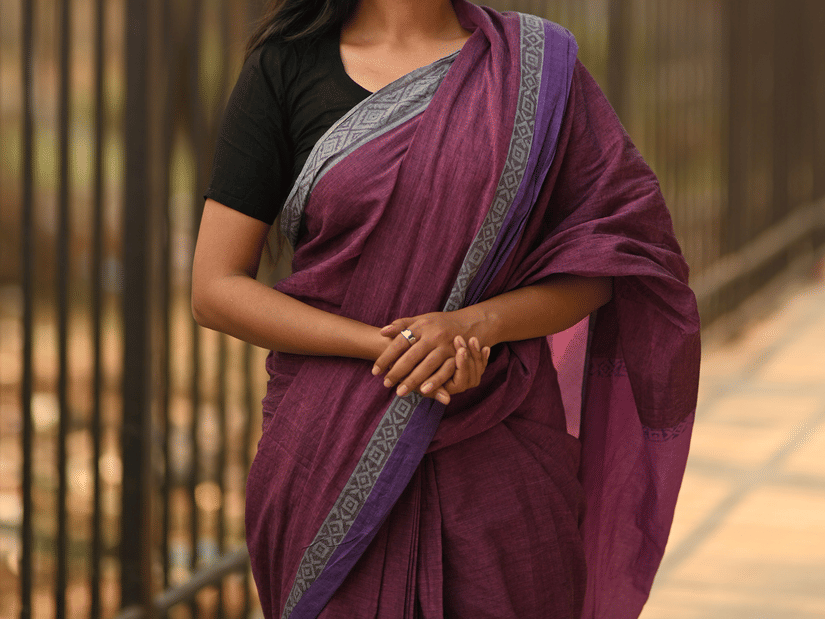
Handloom Techniques: Passed Down Through Generations
This is not a craft documented in manuals; it is taught hand-to-hand, often within the same families, across generations. Woven by the Devanga Chettiyars, who have been recognised as master craftsmen since antiquity, authentic Chettinad handloom sarees preserve this remarkable heritage in every single piece. A young weaver typically learns by sitting beside an older relative at the loom, picking up the rhythm of the shuttle and the logic of the pattern over months rather than through formal instruction.
Natural Fibres and Traditional Methods
Cotton has always been the fibre of choice in this region for a few clear reasons:
It suits the hot, humid climate of Tamil Nadu far better than silk or synthetic blends, allowing air through the weave and absorbing moisture rather than trapping it against the skin.
Traditional dyeing relied on natural and mineral-based colours, which is why older pieces often carry muted, earthy undertones compared with brighter synthetic-dye versions seen today.
Extra warp designs, created using a dobby attachment on the loom, add small repeating motifs across the body of the saree.
A single saree can take several days to complete, and that time investment is what gives these handloom sarees their value over mass-produced alternatives.
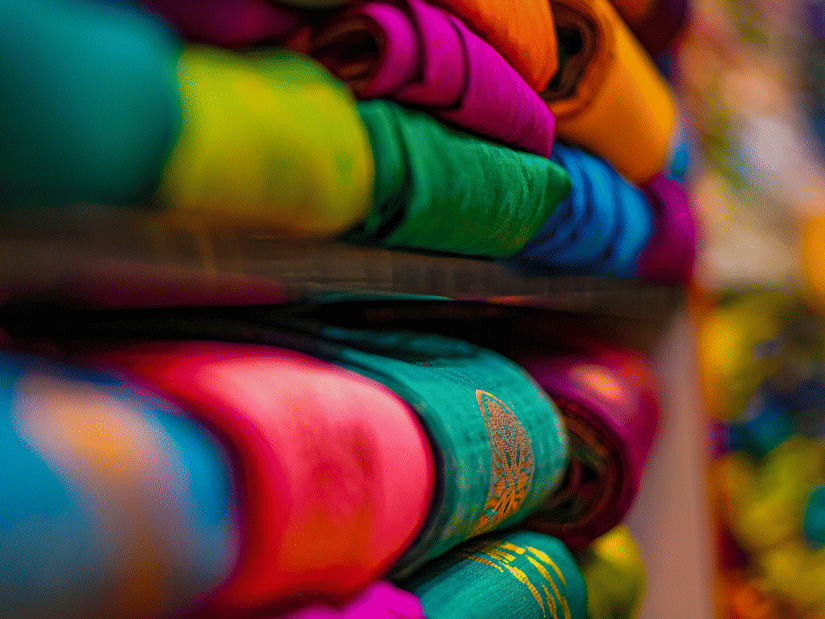
Breathable and Suited to Warm Climates: The dense cotton weave allows airflow while still feeling structured.
Long-lasting Fabric: A well-woven saree withstands repeated washing and regular wear without losing shape or colour, thanks to the yarn's thickness and the tightness of the handloom weave.
Woven Borders, Not Printed Ones: On an authentic piece, the border is woven directly into the fabric as part of the loom process, not stitched on or printed afterwards. Feeling for a slight textural shift from the body is a simple way to check.
Traditional Patterns with Cultural Significance: Checks, stripes, and temple borders are not random choices; many motifs reference temple architecture or ideas of prosperity.
Slight Irregularities that Signal Handwork: Because each piece is woven by hand rather than machine, small variations in weave or colour are normal, a sign of authenticity rather than a flaw.
Local Markets in and Around Karaikudi: The town and its surrounding villages remain a hub for cotton and silk weaving, and local markets offer the widest range of authentic pieces, often sold directly by family-run weaving units rather than large retail chains.
Artisan Communities in Weaving Villages: Several villages near Karaikudi continue to operate as active weaving clusters, where looms are set up inside homes and weaving is a household occupation rather than a factory job.
Weaving Demonstrations near Heritage Sites: Heritage tours in the region often include stops at working looms, where visitors can watch a weaver thread the warp and build up a pattern row by row.
What stands out here is how closely the textile tradition is tied to daily life rather than sitting apart from it. The same patterns that show up in a saree border often echo the geometric tile work found in old Chettiar mansions nearby, a reminder that this was a complete visual language the region built around itself, not just a style of clothing.
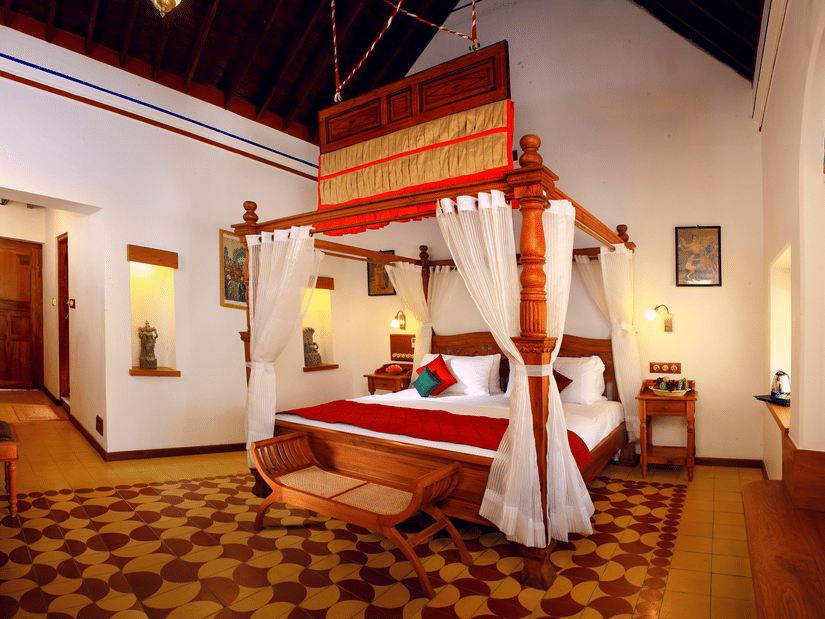
Rooms: Stay in heritage-style rooms, including pool-view options, featuring period furnishings, traditional Athangudi tile flooring, wooden ceilings, air conditioning, Wi-Fi, and other modern comforts.
Dining: Experience authentic Chettinad cuisine through our interactive kitchen, traditional leaf luncheon, experiential dining, fine dining restaurant, and vintage-style bar.
Facilities: Make use of our outdoor swimming pool, banquet halls, cooking classes, and a range of indoor and outdoor activities designed for families and extended stays.
Cultural Activities: Join our guided mansion tour, heritage village walk, bullock cart ride, garland-making and kolam workshops, or learn traditional Chettinad recipes alongside local chefs.
What makes a stay here different from a standard hotel visit is the framing: you are not simply sleeping somewhere convenient for sightseeing, but spending your time inside the same kind of mansion that shaped the region's sense of craft, colour, and detail, with the chance to step out and watch that same sensibility at work nearby.